Dear Lehigh faculty,
It is once again the time of the semester when we recruit faculty to participate in the TRAC Writing Fellows Program and, through your involvement, to incorporate peer learning, student-led learning, and write-to-learn pedagogies into courses across the curriculum at Lehigh. A direct result of your partnership with TRAC will be improvement in the quality of student writing. You will also benefit from interaction with students who are increasingly engaged, knowledgeable, and communicative based on their interactions with TRAC Fellows.
Requests for TRAC Fellows to contribute to a course in fall 2026 are due by the end of the day on Friday, May 1st via this Google Form.
Tell me again: What is TRAC?
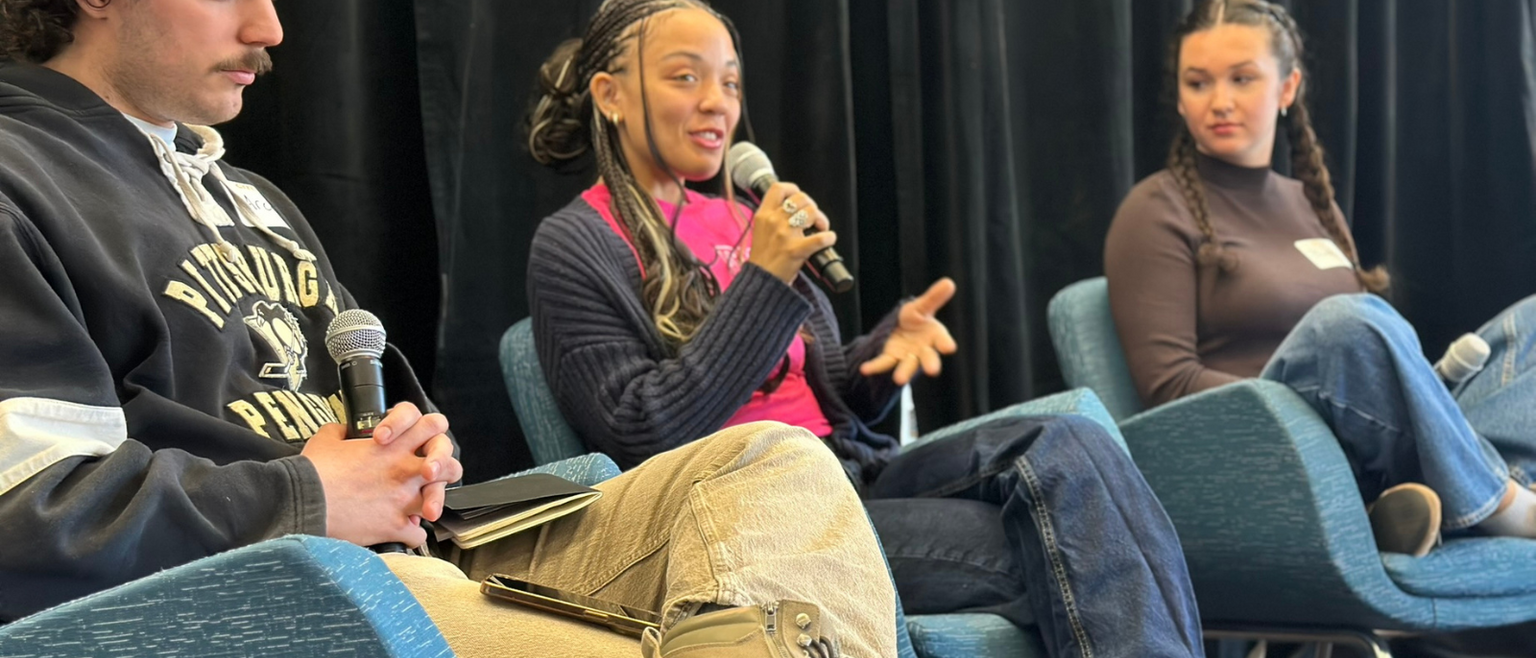
The TRAC acronym stands for technology, research, and communication. TRAC Writing Fellows are talented students from all undergraduate colleges who work to improve students’ writing in a peer-to-peer environment. A total of 85 fellows and 46 faculty were involved in TRAC during the 2025–26 school year.
What does a TRAC Writing Fellow do?
In the fall and spring, faculty at Lehigh agree to have a course TRACed. Individual students or groups meet with a TRAC Fellow 3–4 times during the semester to discuss a piece of writing or project that is central to the course. Each meeting is a conference and conversation between peers. Fellows foster a meaningful writing process when working with students based on collaboration and shared inquiry. A TRAC conference is about listening to another writer, attending to what they wrote, affirming some of their instincts about what is strong or weak within a draft, and sharing experiences about the writing process. Fellows do not grade assignments, fix or line edit a student’s writing, focus on grammar or spelling, or do anything that interferes with peer collaboration and a student’s engagement with revision.
Faculty responsibilities
To facilitate a robust revision process, faculty agree to require submissions of working drafts of writing assignments to a fellow in advance of final due dates. This time, which we call a conferencing window, allows your students to (1) share their draft with their fellow, (2) for the fellow to annotate the paper, and (3) for the student and fellow to meet, in person, for a writing conference in the CITL Commons in Fairchild–Martindale Library.
Benefits for students in TRACed classes
By creating productive partnerships between Lehigh faculty and highly trained writing coaches, TRAC helps undergraduate students:
- improve the quality of their writing;
- have greater confidence as writers;
- use evidence and develop arguments;
- improve the organization of a draft;
- revisit and better understand a writing prompt;
- spend time on revision;
- deepen analyses;
- generate new ideas;
- develop their research skills; and
- see the strengths and weaknesses of a piece of writing.
Working with a fellow, students will practice habits that lead to better writing and communication skills. They will also learn strategies that are important in college, in their disciplines, and in their careers after graduation.
Recommend TRAC to your colleagues
The network of TRACing faculty grows based on your recommendations! For fall 2026, we are particularly interested in reaching faculty who teach in the Colleges of Engineering & Applied Science, Health, and Business and involve writing in their course. We also emphasize involvement with Big Question Seminars in the College of Arts & Sciences.
Learn more
Interested in learning more about TRAC? Visit Lehigh’s Writing Across the Curriculum web page (scroll to “TRAC Information for Faculty”). Answers to many FAQs can be found in this information packet for TRACing faculty, the "What Is TRAC?" video, and the TRAC Dashboard.
Please reach out to Justin Greenlee at jgg223@lehigh.edu with any questions.
Sincerely,
Justin Greenlee, Ph.D. (he/him)
Director of Writing Across the Curriculum
Center for Innovation in Teaching and Learning (CITL)
Office of Educational Innovation and Assessment
Lehigh University
EWFM 370C